
Desserts
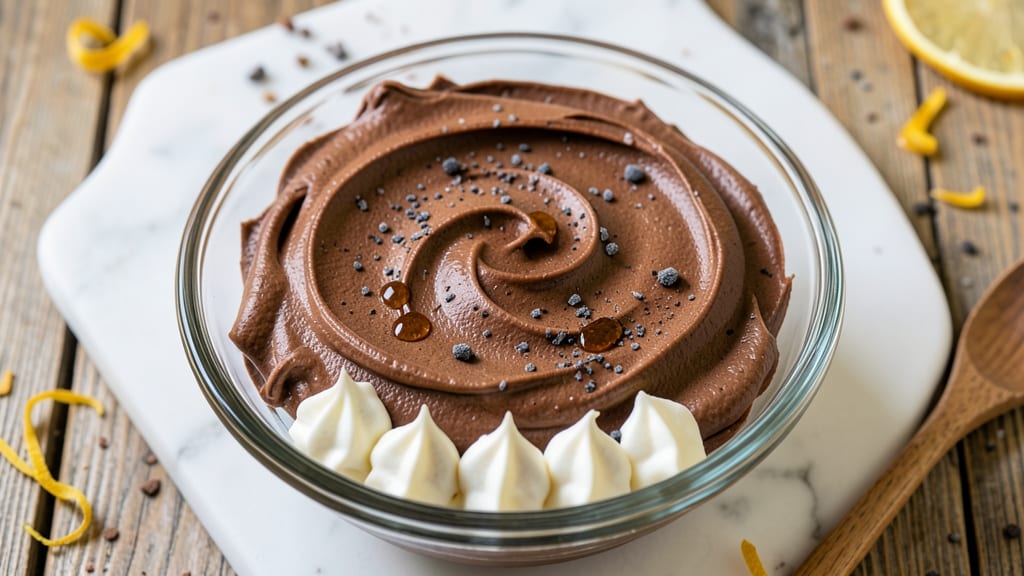
This butterless chocolate frosting delivers restaurant-quality richness without a single pat of butter—perfect for vegan desserts or anyone watching their dairy. The secret lies in coconut oil and aquafaba, which create a silky, spreadable texture that pipes beautifully or spreads effortlessly.
I developed this recipe after years of testing plant-based alternatives, and it never fails to impress. What sets this frosting apart is its versatility—it works equally well on cakes, cupcakes, or cookies while maintaining a smooth, velvety consistency.
The aquafaba (chickpea brine) acts as a natural emulsifier, replacing eggs to achieve that signature fluffiness. No special equipment is needed, just a few pantry staples and a mixer.
By the time you're done, you'll have a frosting that's rich, glossy, and decadent, with a deep chocolate flavor that doesn't rely on butter. The coconut oil adds a subtle sweetness, while vanilla and a pinch of salt balance the richness.
It's the kind of frosting that makes vegan desserts irresistible. Use it to top your favorite vegan cakes, swirl it into brownies, or pipe it into elegant cupcakes. Here's how to make it perfectly every time.
Ingredients for butterless chocolate frosting
Eight plant-based ingredients transform into decadent, butter-free chocolate perfection.
| Ingredient | Amount | Notes |
|---|---|---|
| Unsweetened Coconut Oil 🥥 | ½ cup | Solid at room temperature, melted for mixing |
| Aquafaba 🌱 | ½ cup | Liquid from canned chickpeas, no salt added |
| Dutch-Processed Cocoa Powder 🍫 | ½ cup | Natural for rich chocolate flavor |
| Powdered Sugar 🍚 | 2 cups | Sifted for smooth texture |
| Pure Vanilla Extract 🌿 | 1 tbsp | High-quality, no alcohol needed |
| Pure Maple Syrup 🍁 | 2 tbsp | Grade B for depth of flavor |
| Fine Sea Salt 🧂 | ¼ tsp | Balances sweetness perfectly |
| Lemon Juice 🍋 | 1 tsp | Brightens chocolate flavor |
| Xanthan Gum 🧪 | ¼ tsp | Ensures stability and shine |
The coconut oil is the game-changer here—Trader Joe's or Whole Foods both carry high-quality, unrefined versions that melt beautifully. Look for organic if possible, as it adds subtle nuttiness. Aquafaba might sound weird, but it's just the liquid from a can of chickpeas—no salt added is key. Canned chickpeas from the bulk section (like Banza) work best. The cocoa powder? Dutch-processed ensures smoothness, while natural cocoa gives that classic depth. I always grab Valrhona or Guittard when I can, but Hershey's Special Dark works in a pinch.
No coconut oil? Refined avocado oil or melted vegan butter can stand in, though texture will differ slightly. Short on aquafaba? Unsweetened almond milk at half the amount works, but flavor won't be quite as rich. Powdered sugar clumping? Sift it through a fine-mesh sieve—Diamond Crystal is my go-to. The xanthan gum might seem intimidating, but it's just a stabilizer—Bob's Red Mill sells it in tiny amounts perfect for this recipe. For extra richness, swap half the powdered sugar for vegan dark chocolate chips, melted and cooled.
This frosting keeps beautifully—1 week in the fridge sealed in an airtight container. For longer storage, freeze in 2-tablespoon portions and thaw overnight in the fridge. It thickens as it chills, so let it sit at room temperature for 10-15 minutes before using. Pro tip: Add a dash of almond milk if it gets too thick. The flavor actually improves overnight as everything melds together—perfect for making ahead for parties or special occasions.
Why You'll Love This Recipe
- No-Mess Mixing: I swear by this recipe because it’s just three ingredients whipped into submission—no stand mixer, no butter to refrigerate, no stress. The aquafaba (yes, chickpea water) does all the heavy lifting while I’m still scraping the last of the powdered sugar off my fingers.
- Rich Without Butter: Honestly, the Dutch-processed cocoa powder and coconut oil combo delivers that deep, velvety chocolate flavor without a single gram of butter. It’s the kind of frosting that makes you pause mid-bite, like, “Wait, how is this not loaded with dairy?”—and then you keep eating it anyway.
- Birthday Cake Hero: This frosting is my go-to for last-minute celebrations because it’s actually stable. No melting, no weird textures—just smooth, pipeable perfection that looks fancy but takes less time than deciding what to watch on Netflix. (Yes, even on a Tuesday night.)
- Budget-Friendly Luxury: Between us, this costs half of what store-bought frosting does, and it’s way better. The powdered sugar and aquafaba stretch every dollar, and the leftovers? They last in the fridge for days—perfect for re-frosting cupcakes or slathering on forgotten cake scraps. No waste, all win.
Step-by-step instructions for silky butterless chocolate frosting
Here's how to create a velvety, rich frosting without butter—just pure chocolate indulgence.
Whip the Aquafaba to Stiff Peaks
In a clean, grease-free bowl, combine the 0.5 cup aquafaba and 0.25 tsp xanthan gum. Using a stand mixer fitted with the whisk attachment, beat on high speed for 3-4 minutes until stiff, glossy peaks form. You'll know it's ready when you lift the whisk and the meringue holds its shape for 10 seconds—this is your base for stability and lightness.
I like to wipe down the whisk between steps to prevent any oil or grease from interfering with the aquafaba's ability to whip properly. If the peaks aren't holding, add another 0.125 tsp xanthan gum and mix for 1 more minute. This step is critical—skipping it will result in a frosting that's too thin or collapses when piped.
Melt and Cool the Coconut Oil
In a microwave-safe bowl, melt the 0.5 cup unsweetened coconut oil in 30-second intervals, stirring between each, until fully liquid. Let it cool for 5 minutes until it reaches a warm but not hot temperature—you should be able to touch it comfortably. This prevents the aquafaba from deflating when combined.
If the oil is too hot, the aquafaba will curdle, and your frosting will separate. Test the temperature by gently touching the back of your hand—it should feel warm but not scalding. The cooled oil will blend seamlessly into the aquafaba, creating a smooth, stable base for the frosting.
Gradually Add Powdered Sugar and Cocoa
With the mixer running on low speed, slowly add 1 cup of the powdered sugar and 0.25 cup of the Dutch-processed cocoa powder to the aquafaba mixture. Increase the speed to medium and mix for 2 minutes until fully incorporated. This gradual addition prevents clumping and ensures a silky texture.
Here's the thing—Dutch-processed cocoa powder is less acidic, so it won't react with the aquafaba like natural cocoa might. If you notice any lumps, sift the remaining powdered sugar and cocoa powder together before adding it. The goal is a smooth, lump-free batter that looks like thick pudding.
Incorporate Wet Ingredients for Balance
Add the 1 tbsp pure vanilla extract, 2 tbsp pure maple syrup, 1 tsp lemon juice, and 0.25 tsp fine sea salt to the mixture. Mix on low speed for 1 minute to combine, then gradually add the remaining 1 cup powdered sugar while mixing on medium speed for 2-3 minutes until fully smooth.
The lemon juice and maple syrup brighten the chocolate flavor while balancing the sweetness. The salt enhances the chocolate's depth, so don't skip it—even a small amount makes a difference. If the frosting looks too thick, add 1 tsp warm water at a time until it reaches a spreadable consistency, but not too thin.
Blend in the Coconut Oil for Final Smoothness
With the mixer running on low speed, slowly drizzle in the cooled 0.5 cup melted coconut oil. Increase the speed to medium and mix for 3-4 minutes until the frosting is light, fluffy, and completely smooth. Scrape down the sides of the bowl as needed to ensure even mixing.
This final step is where the magic happens—the coconut oil replaces butter's richness while keeping the frosting stable and pipeable. If it's too thick, add 1 tsp warm water at a time. The frosting should hold its shape when piped but still be smooth enough to spread. Test it by piping a small rosette onto parchment paper—if it holds its form, it's ready.
Pro Tips For Making Butterless Chocolate Frosting
- Melt the Coconut Oil Slowly: I learned this the hard way—dumping cold coconut oil into hot aquafaba makes it seize up like glue. Instead, warm the coconut oil in 10-second bursts in the microwave until just liquid (about 20 seconds total), then let it sit for 30 seconds to cool slightly before mixing. This keeps the texture smooth and prevents lumps from forming when it hits the aquafaba.
- Whip the Aquafaba Cold: Your future self will thank you if you chill the aquafaba in the fridge for 10 minutes before whipping. Cold aquafaba whips faster and holds its volume better, which means your frosting will be lighter and less dense. Skip this, and you’ll end up with something closer to fudge than frosting—trust me, I’ve been there.
- Sift the Cocoa Powder First: Dutch-processed cocoa powder is notorious for clumping, and those lumps turn your frosting grainy. Sift it directly into the mixing bowl before adding anything else—this way, you avoid scraping clumps off the sides later. If you’re lazy (like me), at least whisk it vigorously in the dry ingredients for 30 seconds to break up any hidden clumps.
- Add Powdered Sugar Gradually: This isn’t the prettiest method, but it’s the tastiest: mix the powdered sugar in two batches. First, add half and mix until smooth, then add the rest while the mixer is running. Rushing this step means sugar piles up like a snowdrift, and you’ll end up with a gritty mess. Take the extra 20 seconds—your frosting will be silky.
Storing and reheating this recipe
Fridge Storage Tips
Store your butterless chocolate frosting in an airtight container with a lid, pressing plastic wrap directly on the surface to prevent a skin from forming. I use glass containers with silicone seals—they keep the frosting fresh for up to 7 days in the fridge at 40°F or below.
The coconut oil solidifies slightly when chilled, so let it sit at room temperature for 10 minutes before using to restore its silky texture. 🥥
Freezer Preservation
For longer storage, portion the frosting into 2-tablespoon servings in small, freezer-safe containers or silicone molds. Freeze for up to 3 months—the xanthan gum helps maintain stability, so no crystallization occurs.
When ready to use, thaw overnight in the fridge and give it a quick 10-second microwave zap (or stir with warm water) to smooth out any stiffness. This method works perfectly for prepping frosting for parties or holidays. ❄️
Reheating Methods
If your frosting thickens in the fridge, revive it by placing the container in a bowl of warm water for 2-3 minutes—this gently melts the coconut oil without overheating.
For a quicker fix, add ½ teaspoon warm water at a time while mixing until it reaches a spreadable consistency. Avoid microwaving directly, as it can cause separation. The key is patience: let it sit at room temperature for 5-10 minutes before adjusting. ✨
Consistency Adjustments
Too thick? Thin with warm water or unsweetened almond milk—start with ½ teaspoon and mix well. Too thin? Chill for 30 minutes to firm up, then re-whip briefly with a hand mixer. Pro tip: If using for piping, add ¼ teaspoon xanthan gum to stabilize it further.
The frosting should hold its shape when piped but still be smooth enough to spread—this balance is everything for decorating cakes or cupcakes. 💫
Flavor Enhancement
After reheating, taste and adjust: add ½ teaspoon vanilla extract for depth, or a pinch of espresso powder to intensify the chocolate. The lemon juice and maple syrup will mellow slightly after storage, so a fresh ½ teaspoon lemon juice can brighten the flavor.
Store any leftovers in the fridge for up to 3 days after reheating to maintain freshness. 🍫
Make-Ahead Magic
This frosting actually tastes better the next day as the flavors meld! Make it 24 hours ahead for parties or events—it develops a deeper, richer taste. Keep it refrigerated in an airtight container, and bring it to room temperature before using.
The aquafaba and coconut oil create a stable base that resists separation, making it ideal for meal prep. Trust me, your guests will never guess it’s butter-free! 💪
Nutrition facts
Frequently asked questions
Can I make this frosting without aquafaba?
Yes! Replace the 0.5 cup aquafaba with 0.5 cup unsweetened almond milk or vegan yogurt for a less stable but still delicious frosting. For better structure, add 0.25 tsp xanthan gum to the milk/yogurt before mixing. The texture will be slightly denser but still spreadable—great for cakes or cookies where piping isn't required.
Why does my frosting look grainy?
Graininess usually means the powdered sugar or cocoa powder wasn't fully incorporated. Sift both ingredients together before adding, and mix on low speed first to break up any clumps. If it's still grainy, blend with a hand mixer for 1-2 minutes to smooth it out. Using natural cocoa powder instead of Dutch-processed can also cause texture issues—stick to Dutch-processed for best results.
How do I adjust the sweetness level?
Start with the recipe as written, then taste before adding more sugar. For less sweetness, reduce the powdered sugar by 0.25 cup and add 1 tsp extra cocoa powder for depth. Need it sweeter? Add 1 tbsp maple syrup at a time. Remember, the coconut oil adds natural sweetness—balance carefully! The salt and lemon juice help round out the flavor, so don't skip them.
Can I use this frosting for piping decorations?
This recipe is designed to be pipeable when chilled for 30 minutes first. Use a piping bag with a star tip for rosettes or a round tip for borders. If it's too soft, chill another 10 minutes. For extra stability, add 0.125 tsp more xanthan gum and mix well. Test on parchment paper first to check consistency.
What's the best way to store leftovers?
Transfer to an airtight container with plastic wrap pressed directly on the surface to prevent drying. It keeps for 7 days in the fridge or 3 months in the freezer. Thaw in the fridge overnight and let sit at room temperature for 10 minutes before using. For reheating, place the container in a bowl of warm water for 2-3 minutes—never microwave directly.