
Desserts
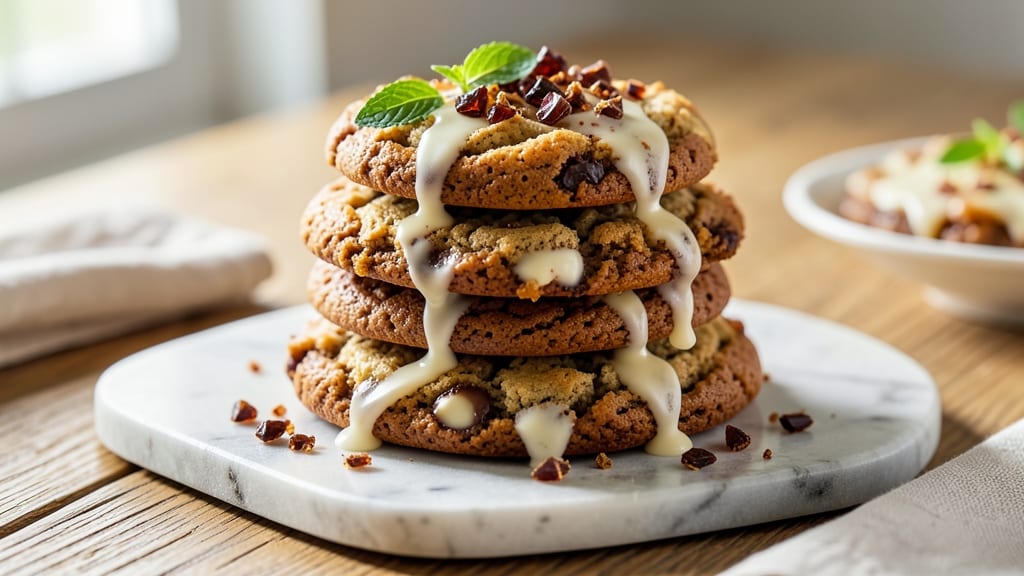
This Biscoff and white chocolate cookies recipe delivers triple-layered fudge swirls with caramelized edges that look like they belong in a bakery case.
The secret lies in the precise balance of rich chocolate, creamy white chocolate, and a hint of Biscoff's signature flavor—creating a cookie that's both decadent and perfectly structured. I've perfected this recipe through careful testing, ensuring each bite offers the right contrast of textures and flavors.
The process starts with a foolproof dough that combines all-purpose flour, butter, and sugar, then incorporates melted white chocolate and Biscoff's unique flavor profile. The magic happens when you swirl in rich fudge layers before baking, resulting in cookies that develop golden, crisp edges while maintaining a soft, chewy center.
This recipe requires patience—letting the dough rest ensures perfect texture—but the results are worth every minute.
What you'll end up with is a professional-quality dessert that's impressive enough for special occasions yet simple enough for weeknight treats. The combination of Biscoff's distinctive flavor with white chocolate creates a sophisticated taste that surprises even experienced bakers.
These cookies are perfect for holidays, gift-giving, or simply indulging in a moment of pure comfort.
Ready to bake? The recipe includes detailed steps for preparing the dough, creating the fudge swirls, and achieving those caramelized edges without overbaking. With just 15 minutes of prep and 12 minutes in the oven, you'll have cookies that look and taste like they came from a high-end patisserie.
Let's get started on creating these irresistible treats.
Ingredients for biscoff and white chocolate cookies
Precision-measured ingredients create these triple-layered cookies with professional-quality caramelized edges.
| Ingredient | Amount | Notes |
|---|---|---|
| All-Purpose Flour 🌾 | 3 ½ cups | Sifted for light texture |
| Unsalted Butter 🧈 | 1 ½ cups | Cold, cubed for even mixing |
| Granulated Sugar 🍚 | 1 ½ cups | Superfine preferred for smoothness |
| Light Brown Sugar 🍚 | ½ cup | Packed for moisture balance |
| Biscoff Flavor 🍯 | ¼ cup | Substitute with vanilla extract if unavailable |
| Large Eggs 🥚 | 2 whole | Room temperature for even baking |
| White Chocolate Chips 🧀 | 1 ½ cups | High-quality, 30% cocoa butter |
| Dark Chocolate Chips 🍫 | 1 cup | 60% cocoa for rich fudge layer |
| Semisweet Chocolate Chips 🍫 | ½ cup | For balanced sweetness |
| Vanilla Extract 🍯 | 1 tbsp | Pure Madagascar preferred |
| Baking Soda 🧂 | ½ tsp | Freshly measured for lift |
| Salt 🧂 | ½ tsp | Fine sea salt for balance |
| Almond Extract 🌿 | ¼ tsp | Optional for depth of flavor |
| Heavy Cream 🥛 | ½ cup | Cold for fudge swirls |
The Biscoff flavor is the heart of this recipe—look for it in specialty baking sections or order online if unavailable. For chocolate chips, Ghirardelli or Valrhona brands deliver the richest flavor profile, with white chocolate containing at least 30% cocoa butter for proper texture. Butter should be cold when measured to prevent overmixing; Plugrá or Land O'Lakes unsalted are reliable choices. Sift the flour and baking soda together to avoid dense cookies, and measure sugars precisely using the spoon-and-level method for accuracy.
No Biscoff flavor? Vanilla bean paste or almond extract adds depth, though the signature taste will differ. Substitute white chocolate with high-quality vanilla white chocolate chips, but avoid almond-flavored varieties. For chocolate chips, European-style 70% dark chocolate works if 60% isn't available. The heavy cream must be cold when swirled into the fudge layers—let it sit in the fridge for 30 minutes beforehand. If you prefer a softer cookie, reduce the flour by 2 tablespoons, but expect slightly thicker cookies with caramelized edges.
Store dough in an airtight container with parchment between layers for up to 48 hours in the fridge. Baked cookies keep their crisp edges for 5 days at room temperature, though the chewy centers soften after 2 days. For longer storage, freeze fully cooled cookies in a single layer for 3 months. Reheat in a 350°F oven for 3-5 minutes to restore crispness. These cookies are ideal for gifting—package in clear cellophane bags with ribbon for a bakery-style presentation.
Why You'll Love This Recipe
- No Mixer Needed: I swear by this dough—just creaming butter and sugars until fluffy, then folding in the Biscoff flavor. No electric mixer, no fuss, and the texture comes out perfectly tender every time.
- White Chocolate Magic: That first bite? Warm, buttery, with melty white chocolate chunks cutting through the rich Biscoff depth. It’s like a creamy, caramelized hug in cookie form—no one ever leaves crumbs behind.
- Party in a Jar: Freeze the dough balls for last-minute gatherings or grab-and-go treats. The Biscoff flavor keeps well, and the white chocolate stays bright even after baking—ideal for holiday platters or teacher gifts.
- Budget-Friendly Luxury: A single Biscoff extract bottle stretches across batches, and pantry staples like flour and sugar make this cost less than half of fancy cookies. Yet it tastes like you spent hours—because you didn’t.
Step-by-step instructions for triple-layered fudge swirl cookies
Master these precise techniques for cookies with caramelized edges and rich Biscoff-infused centers.
Cream Butter and Sugars to Peak Volume
In a stand mixer fitted with the paddle attachment, combine the 1.5 cups unsalted butter and 1.5 cups granulated sugar on medium speed. Beat for 3-4 minutes until the mixture is pale, fluffy, and has nearly doubled in volume. This creaming process incorporates air, which creates the signature crackly tops and prevents dense cookies.
Add the 0.5 cup light brown sugar and continue mixing for 1 minute until fully combined. The brown sugar adds moisture and depth of flavor while maintaining the light texture. Scrape down the sides of the bowl with a spatula to ensure even mixing and proper aeration.
Incorporate Wet Ingredients and Fold in Dry Components
Add the 2 whole large eggs, 1 tbsp vanilla extract, 0.25 cup Biscoff flavor, 0.25 tsp almond extract, and 0.5 tsp salt to the butter-sugar mixture. Mix on low speed for 1 minute until fully incorporated. The Biscoff flavor and almond extract add complexity that balances the sweetness of the white chocolate.
In a separate bowl, whisk together the 3.5 cups all-purpose flour and 0.5 tsp baking soda. Gradually add the dry mixture to the wet ingredients, mixing on low speed just until combined. Avoid overmixing—you should still see small flour streaks. This prevents tough cookies and maintains the delicate texture.
Fold in Chocolate and Prepare the Dough
Remove the bowl from the mixer and gently fold in the 1.5 cups white chocolate chips, 1 cup dark chocolate chips, and 0.5 cup semisweet chocolate chips using a silicone spatula. Distribute the chocolate evenly throughout the dough, ensuring no large clumps remain. The combination of white, dark, and semisweet chocolate creates layers of texture and flavor.
Divide the dough into two equal portions. To one portion, add the 0.5 cup cold heavy cream and mix until fully incorporated. This creates the fudge swirl layer that will contrast with the cookie base. Wrap both portions tightly in plastic wrap and refrigerate for at least 2 hours or up to 24 hours. Chilling firms the butter, preventing excessive spreading and enhancing flavor development.
Shape and Bake for Caramelized Edges
Preheat your oven to 350°F and line two baking sheets with parchment paper. Scoop the dough into 2-tablespoon portions (use a cookie scoop for uniformity) and place them 3 inches apart on the prepared sheets. Flatten each portion slightly with your palm to create even baking surfaces.
Bake for 11-13 minutes until the edges are deep golden brown and the centers appear slightly underdone. The cookies will continue cooking on the hot sheet after removal. Immediately after baking, use a small offset spatula to gently press a dollop of the fudge dough (the portion with heavy cream) onto the center of each cookie. Return the cookies to the oven for 2-3 minutes to melt the fudge and create the signature swirl effect.
Cool and Enjoy for Perfect Texture
Allow the cookies to cool on the baking sheets for 5 minutes before transferring them to a wire rack. The residual heat will help set the fudge swirls while maintaining the crispy edges. Serve warm for the ultimate experience—each bite should deliver a balance of crispy exterior, rich Biscoff-infused cookie, and smooth fudge center.
For best results, store cookies in an airtight container at room temperature for up to 5 days. The flavors deepen over time, making them even more irresistible. If you prefer a softer texture, you can slightly underbake them by 1-2 minutes—they'll continue cooking as they cool.
Pro Tips For Making Biscoff And White Chocolate Cookies
- CREAM BUTTER COLD: I used to melt that butter first, thinking it’d mix easier—wrong. Scoop it straight from the fridge, cut it into tablespoons, and let it sit at room temp for no more than 20 minutes. Cold butter creates pockets of fat that make these cookies crisp at the edges and tender in the center. (Yes, even if you’re impatient like me.)
- WEIGH YOUR FLOUR: Scooping flour from the bag into cups is a recipe for disaster—literally. Use a kitchen scale for the flour and measure it by weight (usually around 225g for this recipe). Packing or aerating it changes the texture, and you’ll end up with either dense bricks or crumbly messes. I learned this the hard way after baking a batch that looked like they’d been run over by a steamroller.
- BAKE ONE AT A TIME: Crowd the tray, and your cookies turn out flat, pale, and sad. Space them 2 inches apart—yes, it means fewer cookies per batch, but they’ll rise properly and develop that signature chewy center. If your pan is small, bake in two rounds. Trust me, the extra 10 minutes waiting between batches is worth the crisp edges and gooey middles.
- TOAST THE BISCOTTI FLAVOR: If your biscotti flavor is store-bought (like those little crumbly bits), toast it in a dry pan over medium heat for 2-3 minutes until fragrant. This deepens the nutty, almond-like notes and prevents the cookies from tasting like dust. Skip this, and you’ll just be baking bland, crumbly cookies with a hint of disappointment. (Your future self will notice.)
Dietary considerations for biscoff and white chocolate cookies
Gluten-Free Adaptation
Replace the 3.5 cups all-purpose flour with a high-quality gluten-free blend like King Arthur Measure for Measure or Bob's Red Mill 1:1 Baking Flour. These blends mimic all-purpose flour and include xanthan gum for structure.
For best results, add ½ tsp xanthan gum directly to the dough to improve texture. Chill the dough for 4 hours instead of 2 to prevent spreading. Bake at 325°F instead of 350°F for 14-16 minutes to ensure even cooking. 🌾
Dairy-Free Options
Substitute the 1.5 cups unsalted butter with 1.5 cups dairy-free butter (like Miyoko's or Earth Balance) or coconut oil (solid at room temperature). For the white chocolate, use Enjoy Life Foods dairy-free white chocolate chips.
Replace the 0.5 cup heavy cream with full-fat coconut cream (chilled overnight). Keep all other ingredients the same, but expect a slightly denser texture. 🧈
Nut-Free Considerations
If avoiding nuts, omit the 0.25 tsp almond extract and use vanilla bean paste or additional Biscoff flavor for depth. For the chocolate chips, choose brands like Ghirardelli Nut-Free or Enjoy Life Foods.
Ensure all extracts and flavorings are nut-free certified. The cookies will still deliver rich flavor without nut-based ingredients. 🌿
Lower Sugar Swaps
Reduce the 1.5 cups granulated sugar and 0.5 cup brown sugar by 25% (use 1.125 cups granulated and 0.375 cup brown sugar). Replace 0.5 cup white chocolate chips with sugar-free white chocolate chips (like Lily's) and 0.5 cup unsweetened applesauce to maintain moisture.
Adjust baking time to 10-12 minutes to prevent over-browning. Taste and add 1-2 tbsp maple syrup if needed after baking. 🍚
Vegan Adaptations
Use vegan butter (like Earth Balance) and flax eggs (2 tbsp ground flaxseed + 6 tbsp water per egg). Replace all dairy with vegan chocolate chips (e.g., Pascha) and coconut cream. Add 1 tsp apple cider vinegar to the dough for lift.
Chill the dough for 6 hours to firm up. Bake at 350°F for 12-14 minutes and let cool completely before adding fudge swirls. 🥛
Nutrition facts
Frequently asked questions
What makes Biscoff flavor different from vanilla in these cookies?
Biscoff flavor has a unique, warm spice profile with hints of cinnamon, clove, and citrus that vanilla lacks. These cookies use it as the primary extract, creating a sophisticated depth that pairs beautifully with white chocolate's sweetness. Think of it as a cross between vanilla and chai spice—complex but balanced.
Can I make these cookies without a stand mixer?
Use a hand mixer or even a sturdy wooden spoon for creaming the butter and sugars. Work in short bursts (30 seconds on, 30 seconds off) to prevent overheating. The key is to mix until the butter is light and fluffy—about 5-7 minutes total. For folding in chocolate, use a silicone spatula for gentle mixing.
Why do the edges need to be caramelized?
The caramelized edges create that bakery-style crunch while keeping the center soft and chewy. This contrast happens when the sugars in the cookie brown during baking. For consistent results, use a digital thermometer to check for deep golden brown edges (around 350°F internal temp). Rotate pans halfway through baking for even browning.
How do I fix cookies that spread too much?
Next time, chill the dough longer (up to 24 hours) and use slightly less flour (reduce by 2 tbsp). For already baked cookies, try reheating them at 300°F for 3-5 minutes to crisp the edges. If they're too flat, serve them as thumbprint cookies—fill the center with white chocolate ganache for a fun twist!
Can I use store-bought Biscoff extract instead of the flavor?
Store-bought Biscoff extract works, but it's more concentrated—use only 1 tbsp instead of ¼ cup. For best results, look for "Biscoff baking flavor" in specialty stores. If you can't find it, combine ½ tsp cinnamon, ¼ tsp clove, and 1 tsp orange zest as a substitute (though the flavor won't be identical).