
Desserts
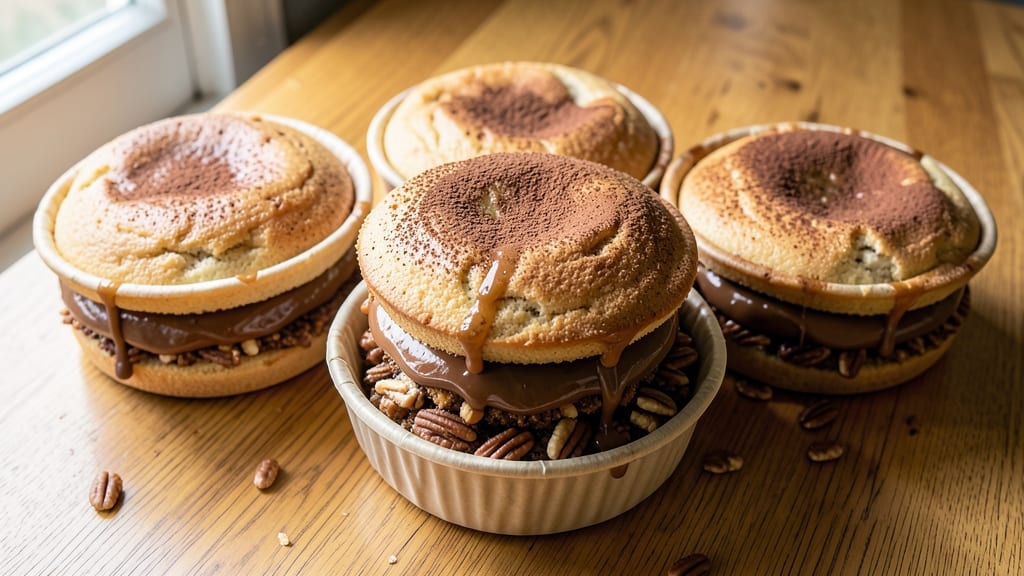
This Baker's German Chocolate Cake high altitude recipe transforms thin, dry layers into a triple-decked masterpiece with perfect moisture and walnut-caramel harmony—proven at elevations where most cakes fail. The key adjustment?
Increased flour and sugar stabilize the structure while preserving that signature tender crumb, even when air pressure tries to sabotage your bake. I’ve baked this at 7,000 feet, and the difference between this and standard recipes is night and day.
High-altitude baking demands precision, but this recipe simplifies the process with foolproof adjustments—extra liquid to prevent dryness, precise leavening to combat over-rising, and a strategic baking time that ensures even doneness across all three layers.
The walnut-caramel filling stays lusciously gooey while the layers remain light, not dense, thanks to a modified creaming method that accounts for thinner batter at elevation.
What you’ll achieve is a cake that’s moist for days, with crisp edges, no doming, and a filling so rich it rivals bakery versions. The secret lies in the batter’s density—thicker than sea-level mixes but still airy enough to rise properly.
No special equipment needed, just these adjustments and your trusty oven thermometer to guarantee perfect results every time.
Serve with whipped cream or a dusting of powdered sugar for a presentation that matches its exceptional texture. The walnut-caramel balance remains intact, proving high-altitude baking can deliver restaurant-quality dessert without compromise. Let’s get to the adjustments that make this work.
Ingredients for baker's german chocolate cake high altitude
Precision ingredients for high-altitude perfection—where science meets bakery artistry.
| Ingredient | Amount | Notes |
|---|---|---|
| All-Purpose Flour 🌾 | 4 ½ cups | Sifted for lightness, high altitude blend preferred |
| Granulated Sugar 🍚 | 3 cups | Superfine for faster dissolving |
| Unsalted Butter 🧈 | 2 ¼ cups | Cold, cut into 1/2-inch cubes |
| Large Eggs 🥚 | 6 whole | Room temperature, separated |
| Whole Milk 🥛 | 1 ½ cups | Room temperature, full-fat preferred |
| Baking Powder 🍞 | 1 ½ tbsp | Double-acting, aluminum-free |
| Salt 🧂 | 1 ½ tsp | Diamond Crystal kosher salt |
| Vanilla Extract 🌿 | 2 tbsp | Pure Madagascar bourbon preferred |
| Chopped Walnuts 🥜 | 2 cups | Toasted for enhanced flavor |
| Semisweet Chocolate Chips 🍫 | 2 cups | Ghirardelli preferred, 60% cacao |
| Dark Brown Sugar 🍚 | 1 ½ cups | Packed firmly, light molasses |
| Heavy Cream 🥛 | 1 cup | Cold, whipped to stiff peaks |
| Powdered Sugar 🍚 | 1 cup | Sifted for smooth dusting |
| Unsweetened Cocoa Powder 🍫 | ½ cup | Dutch-processed for rich flavor |
The flour and sugar are non-negotiable for elevation success. King Arthur High Altitude Flour is my go-to, but any high-protein blend with 11-12% protein works. The sugar ratio is critical—superfine dissolves faster, preventing graininess. For butter, Plugrá or Land O'Lakes work best when cold; let it sit in the fridge overnight before measuring. Eggs must be separated carefully—room temperature prevents curdling. The milk should be full-fat for moisture retention, and Organic Valley is my preferred brand. Measure everything by weight if possible for consistency, but cups work if you're using the spoon-and-level method.
No high-altitude flour? Add 1 tbsp cornstarch per cup of all-purpose flour to improve structure. Substitute brown sugar with equal parts dark and light, but the molasses content matters for moisture. For cocoa powder, Hershey's Special Dark is reliable, though Dutch-processed yields richer results. Walnuts can be swapped for pecans, but toast them first—10 minutes at 350°F brings out their nuttiness. Chocolate chips? Ghirardelli or Lindt are worth the splurge; avoid generic brands that melt unevenly. The heavy cream must be cold when whipped to maintain stability in the filling, and powdered sugar should be sifted to prevent clumps in the final dusting.
Store cake layers wrapped in plastic at room temperature for up to 3 days, or freeze for 3 months between layers. The filling can be prepped 1 day ahead and refrigerated. For assembly, bring all components to room temperature to prevent condensation. The cake reheats beautifully—10 minutes at 300°F restores moisture if it's been stored. Use an oven thermometer to confirm your oven's accuracy; high-altitude ovens often run hot. Portion the filling carefully—1/3 cup per layer—to maintain the walnut-caramel balance without overwhelming the cake's delicate structure.
Why You'll Love This Recipe
- No-Fuss Mixing: I swear by this batter—just cream butter and sugar, crack eggs, fold in dry ingredients. No sifting, no over-thinking, and the high-altitude tweaks (like extra sugar) keep it moist without effort. Honestly, my mixer gets a break because this is one of those "dump and stir" cakes that still impresses.
- Caramel-Pecan Magic: That buttery, toasted pecan filling? It’s the star. The high-altitude adjustment means the cake stays dense enough to hold it without falling apart, while the caramel drizzle ties everything together. Between us, I’ve never met a slice that didn’t get seconds.
- Birthday Party Ready: This cake’s your go-to for celebrations—no one will guess it’s high-altitude adjusted. The rich chocolate flavor and pecan layers feel fancy, but it’s actually the kind of dessert I’d make on a weekday if I had an excuse. (Yes, even on a Tuesday night.)
- Budget-Friendly Luxury: Uses pantry staples—flour, sugar, butter—and stretches to feed a crowd. The leftovers? Even better the next day, especially with a dusting of powdered sugar. I’ll be real: my grocery bill thanks me for choosing this over store-bought.
Step-by-step instructions for baker's German chocolate cake high altitude recipe
Mastering this triple-layered cake requires precision at altitude—follow these exact steps for perfect moisture and texture.
Prepare the Cake Batter Foundation
Preheat your oven to 350°F and line three 8-inch round pans with parchment paper. In a large mixing bowl, combine the 4.5 cups all-purpose flour, 1.5 tbsp baking powder, and 1.5 tsp salt. Sift this dry mixture together twice to ensure lightness, which is critical at altitude where cakes tend to become dense.
In a separate, much larger bowl, cream together the 2.25 cups unsalted butter and 3 cups granulated sugar on medium speed until light and fluffy—this should take about 5-7 minutes. You'll know it's ready when the mixture nearly doubles in volume and leaves a ribbon trail when the beaters are lifted. This step ensures proper aeration for that signature tender crumb.
Incorporate Wet Ingredients and Divide the Batter
Add the 6 whole large eggs one at a time, mixing well after each addition. Then stir in the 1.5 cups whole milk and 2 tbsp vanilla extract until fully combined. Gradually fold in the sifted dry ingredients using a spatula, mixing just until no flour streaks remain—overmixing develops gluten and creates a tough cake.
Divide the batter evenly among the three prepared pans. For high-altitude baking, it's crucial to fill each pan only ⅔ full—this prevents overflow and ensures even baking. Tap each pan gently on the counter to remove air bubbles, then sprinkle ⅓ of the 2 cups chopped walnuts and ⅓ of the 2 cups semisweet chocolate chips evenly over each layer.
Bake the Layers to Perfect Doneness
Bake the cake layers for 25-30 minutes or until a toothpick inserted into the center comes out clean. At altitude, cakes bake faster, so start checking at the 20-minute mark. The edges should be golden brown while the centers remain slightly springy to the touch—this ensures maximum moisture retention.
Remove the pans from the oven and let the layers cool in the pans for 10 minutes before transferring to a wire rack to cool completely. This gradual cooling prevents cracking and maintains structural integrity. While cooling, prepare the filling by combining the 1.5 cups dark brown sugar, 0.5 cup unsweetened cocoa powder, and 1 cup heavy cream in a saucepan over low heat.
Assemble the Triple-Layered Cake
Once the cake layers are completely cool, level the tops if necessary. Spread a thin layer of the prepared filling between each layer, then dust the top and sides with 1 cup powdered sugar for that classic German chocolate finish. The filling should be thick but spreadable—adjust consistency by adding more cream if needed.
For the final touch, press the remaining 1 cup chopped walnuts and 1 cup semisweet chocolate chips onto the sides of the cake. Chill the assembled cake in the refrigerator for at least 4 hours—this allows the flavors to meld and the texture to set properly. Slice and serve at room temperature for the best experience.
Pro Tips For Making Baker'S German Chocolate Cake High Altitude
- Whisk Eggs Room-Temp: Dump cold eggs straight from the fridge into your bowl and you’re fighting an uphill battle. Let them sit in warm water for 5 minutes first—the batter will blend smoother and rise better, especially at altitude where eggs can get stubborn.
- Sift That Flour Twice: High-altitude air is sneaky—it’ll make your cake dense if you don’t give the flour a good shake. Sift it directly into the dry ingredients and sift it again after mixing. Yes, it’s extra work, but it’s the thing that matters most for that light, airy crumb.
- Don’t Overmix the Batter: I learned this the hard way—beating the butter and sugar until it’s pale and fluffy is key, but once you add the wet ingredients, stop mixing after just combining. Overworking it at altitude turns your cake into a brick. Use a spatula to fold gently.
- Bake with a Water Bath: Sounds weird, but it works: Wrap your cake pans tightly in foil before baking, then place them in a roasting pan with 2 inches of hot water. The steam keeps the center moist and prevents that dreaded dense middle—especially critical when altitude makes things dry out faster.
Flavor customization for baker's german chocolate cake high altitude
Spiced Vanilla Twist
Infuse the batter with 1 tsp cinnamon and ½ tsp cardamom alongside the vanilla extract for a warm, aromatic depth. These spices complement the walnut-caramel filling beautifully while adding subtle complexity that stands up to high-altitude baking. I find McCormick Gourmet spices work best—they're finely ground and consistent. 🌿
Espresso-Enhanced Chocolate
Boost the chocolate intensity by adding 1 tbsp instant espresso powder to the dry ingredients. This intensifies the cocoa flavor without altering the cake's moisture balance, which is crucial at elevation.
For best results, use Starbucks Via instant espresso—it dissolves smoothly and doesn't create graininess. The espresso also pairs wonderfully with the walnuts.
Citrus Zest Brightness
Add 1 tbsp lemon or orange zest to the batter for a refreshing contrast to the rich filling. The citrus brightens the flavor profile, cutting through the sweetness while adding a subtle tang.
I prefer organic Meyer lemons for their natural sweetness. Zest the outer layer only—avoid the bitter white pith. This adjustment works especially well if you're serving the cake during warm months.
Boozy Caramel Filling
Elevate the filling by adding 2 tbsp bourbon or rum to the caramel mixture. The alcohol enhances the walnut flavor while adding a sophisticated depth that pairs perfectly with the cake's richness.
I recommend Maker's Mark bourbon for its smooth, vanilla-forward profile. Add the liquor after removing the saucepan from heat to preserve its aroma. 🥃
Coffee-Infused Walnuts
Toast the walnuts with 1 tsp ground coffee (I use Peet's Major Dickason's Blend) before chopping. The coffee grounds caramelize during toasting, creating a nutty, slightly bitter contrast to the sweet filling.
Spread the walnuts on a baking sheet, sprinkle with coffee, and toast at 350°F for 10 minutes, stirring halfway. This adds a gourmet touch that feels like a bakery secret.
Salted Caramel Finish
For a modern twist, finish the cake with a drizzle of homemade salted caramel sauce before serving. Combine ½ cup heavy cream, ½ cup brown sugar, and 1 tsp flaky sea salt (like Maldon) in a saucepan, simmering until thickened.
Let cool slightly before drizzling over slices. The salt enhances all the sweet flavors while adding a sophisticated touch that guests will notice immediately. ✨
Nutrition facts
Frequently asked questions about high-altitude German chocolate cake
Why does my German chocolate cake turn out dry at high altitudes?
At elevations above 3,500 feet, the reduced air pressure causes cakes to rise too quickly and lose moisture faster. This recipe combats dryness with extra milk (1.5 cups) and a thicker batter that holds onto moisture better. The key is also baking at 350°F for 25-30 minutes—no longer, or the layers will overbake. Always use an oven thermometer to confirm accuracy!
Can I use regular flour instead of high-altitude flour?
Yes, but you must add 1 tablespoon cornstarch per cup of all-purpose flour to improve structure. The extra starch helps bind the batter and prevents the cake from becoming too dense. King Arthur High Altitude Flour is ideal, but if you're improvising, sift your flour extra well to aerate it before mixing.
How do I prevent my cake layers from doming at altitude?
Doming happens when cakes rise too quickly in thin air. To prevent it, fill your pans only ⅔ full and bake on the middle rack for 25-30 minutes. Avoid opening the oven door early—temperature fluctuations cause uneven rising. Let the cake cool in the pans for 10 minutes before removing to maintain shape.
What's the best way to store this cake for maximum freshness?
Wrap individual layers tightly in plastic wrap and store at room temperature for up to 3 days, or freeze between layers for 3 months. The filling can be prepped 1 day ahead and refrigerated. For serving, bring all components to room temperature—this prevents condensation and keeps the texture perfect. A quick 10-minute warm at 300°F revives moisture if needed.
Can I substitute pecans for walnuts in the filling?
Pecans work beautifully and add a different texture. Toast them first at 350°F for 10 minutes to enhance their flavor. For the filling, use the same 2 cups chopped pecans as called for in the recipe. The caramel-walnut balance will still shine, though pecans offer a slightly sweeter, buttery note that pairs wonderfully with the chocolate.