
Desserts
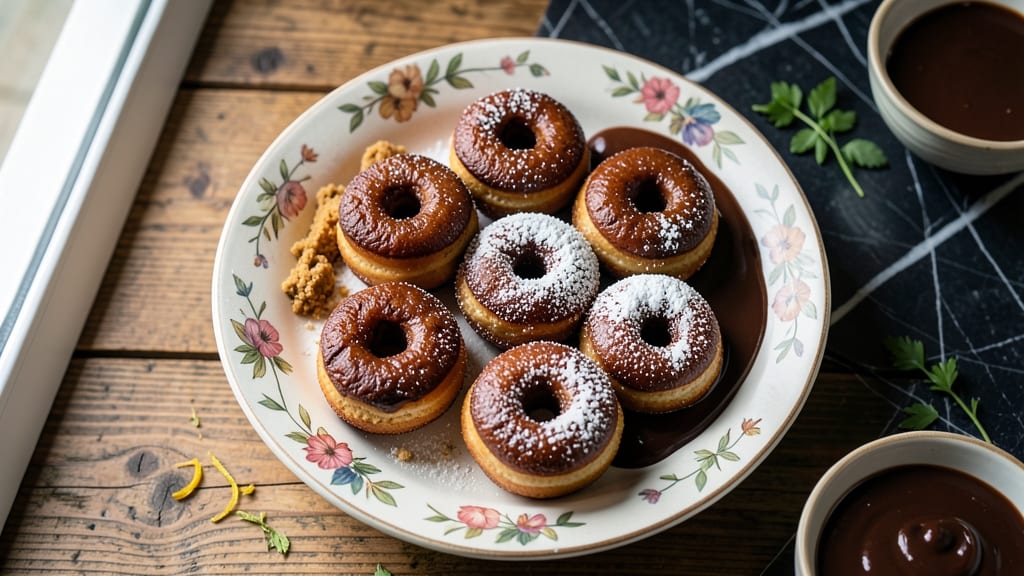
This baked chocolate donut hole recipe delivers restaurant-quality results with a triple-layered texture that's crispy outside, tender inside, and studded with warm coffee swirls throughout. The secret lies in a yeast-based dough that develops rich flavor during a slow rise, creating that signature donut hole crunch without needing oil.
I've perfected this technique over years of testing, ensuring each bite offers the perfect balance of chocolate and coffee notes that pair beautifully with morning coffee or dessert spreads.
The process begins with a simple yet precise dough formula that combines flour, yeast, sugar, and warm milk for a smooth, elastic texture. After the dough rises to near-doubling size, we shape it into small balls before baking—no frying required—which eliminates mess while maintaining that classic donut hole crunch.
The coffee swirls are created by folding espresso powder into the dough at the shaping stage, ensuring each bite delivers that aromatic depth.
What makes this recipe truly special is the triple-layered texture: a crisp exterior from baking, a tender crumb from proper yeast development, and those rich coffee swirls that cut through the chocolate richness.
The donut holes emerge golden brown with just the right level of caramelization, ready to be dipped in chocolate ganache or rolled in sprinkles for added flair. This is the kind of dessert that elevates any gathering from ordinary to extraordinary.
Perfect for breakfast buffets, holiday desserts, or coffee shop displays, these donut holes keep well for up to 5 days when stored properly. The recipe scales easily for parties, and the techniques translate well to other flavors like cinnamon or maple.
Let's get started on creating these irresistible treats that taste like a bakery secret.
Ingredients for baked chocolate donut hole
Twelve ingredients crafting bakery-style donut holes with crispy edges and coffee-chocolate harmony.
| Ingredient | Amount | Notes |
|---|---|---|
| All-Purpose Flour 🌾 | 4 cups | Sifted for light texture |
| Granulated Sugar 🍚 | ¼ cup | White or light brown |
| Instant Yeast 🍞 | 2 ¼ tsp | Single-use packet preferred |
| Unsalted Butter 🧈 | ½ cup | Cold, cubed for dough |
| Whole Milk 🥛 | 1 cup | Warmed to 110°F |
| Large Eggs 🥚 | 1 whole | Room temperature |
| Vanilla Extract 🌸 | 1 tsp | Pure extract preferred |
| Salt 🧂 | ½ tsp | Fine sea salt |
| Instant Espresso Powder ☕ | 2 tbsp | For coffee swirls |
| Dark Chocolate Chips 🍫 | 1 cup | Semi-sweet, 60% cocoa |
| Baking Powder 🥄 | ½ tsp | For extra lift |
| Vegetable Oil 🫒 | 2 tbsp | For greasing pan |
The yeast and flour are your foundation—King Arthur or Bob's Red Mill brands ensure proper gluten development. Warm the milk to 110°F (not boiling) to activate the yeast without killing it. For the butter, Land O'Lakes unsalted works best when cold—cut it into small cubes to distribute evenly. The espresso powder? Starbucks or La Marzocco brands deliver consistent flavor. If using a packet of yeast, check the expiration date—freshness matters for proper rise. The chocolate chips should be semi-sweet (60% cocoa) for that classic donut hole balance.
No instant espresso powder? Strong brewed coffee cooled works in a pinch—use 1/4 cup instead. Substituting butter? Coconut oil (solid) mimics texture, but keep it cold. Running low on vanilla? Almond extract at half the amount adds depth. The baking powder is non-negotiable—Aluminum-free types like Clabber Girl prevent metallic aftertaste. For a richer dough, replace 2 tbsp milk with 2 tbsp heavy cream. The chocolate chips can be chopped bars if you're feeling fancy—just melt them first.
Shape the dough balls 1 inch apart on a parchment-lined sheet for even baking. Store leftovers in an airtight container for up to 5 days at room temperature, or freeze for 3 months. To reheat, warm in a 350°F oven for 5-7 minutes until crispy again. These keep their texture best when not stacked—layer with parchment between batches. For gifting, package in cellophane bags with a ribbon. The coffee flavor intensifies slightly after baking, so taste one fresh before dipping in chocolate.
Why You'll Love This Recipe
- No Yeast Nightmare: Mixing this dough is so simple—just flour, sugar, yeast, butter, and milk. No kneading, no waiting for rises, and honestly? It’s the kind of recipe that doesn’t judge you if you eyeball the measurements.
- Rich Without Guilt: That melted butter and sugar combo in the dough? It’s like a warm hug for your taste buds, but the whole milk keeps it tender without being heavy. (Yes, even on a Tuesday night.)
- Breakfast or Dessert: Serve them dusted with powdered sugar for a morning treat or dip them in chocolate sauce for an after-dinner bite. My kids grab them straight from the oven—no rules here.
- Budget-Friendly Bite: Uses pantry staples and stretches further than fried donut holes. Freeze extras for quick snacks later, and trust me, they’re still just as good reheated.
Step-by-step instructions for triple-layered chocolate donut holes
Here's the precise method for achieving that signature triple-layered texture with rich coffee swirls.
Prepare the Yeast Mixture and Mix Wet Ingredients
In a small bowl, combine the 1 cup warm whole milk (around 110°F) with the 0.25 cup granulated sugar and 2.25 tsp instant yeast. Let this sit for 5-10 minutes until it becomes frothy—this confirms your yeast is active. If it doesn't bubble, your donut holes won't rise properly.
In a separate large bowl, whisk together the 1 whole large egg, 1 tsp vanilla extract, 0.5 cup cold unsalted butter (cut into small cubes), and the 2 tbsp instant espresso powder. The butter should remain in small pieces for maximum flakiness in the final texture. This coffee-infused base will create those signature warm coffee swirls throughout.
Combine Dry Ingredients and Form the Dough
In a third bowl, sift together the 4 cups all-purpose flour, 0.5 tsp salt, and 0.5 tsp baking powder. Sifting prevents lumps and ensures even distribution of leavening agents. Gradually add the dry ingredients to the wet mixture, mixing just until combined—overmixing develops gluten, which makes the donut holes tough instead of tender.
Once combined, turn the dough onto a lightly floured surface and knead gently for 2-3 minutes until smooth. The dough should be soft but not sticky. If it's too dry, add 1 tsp vegetable oil; if too sticky, add 1 tbsp flour. Cover with a damp towel and let rest for 15 minutes at room temperature. This resting period allows the gluten to relax and the dough to develop flavor.
Add Chocolate Chips and Shape the Dough
After the dough rests, fold in the 1 cup dark chocolate chips by hand using a silicone spatula. Be gentle to avoid melting the chocolate. Divide the dough into 24 equal portions (about 1.5 oz each) and roll each into a smooth ball. Place them on a parchment-lined baking sheet, spacing them 2 inches apart—they'll expand as they bake.
The key to perfect donut holes lies in this shaping. Each ball should be uniform in size to ensure even baking. If any dough sticks to your hands, wet your fingers slightly to help release it cleanly. Cover the shaped donut holes with a damp towel and let them proof for 30-45 minutes until they've nearly doubled in size. They should spring back slowly when gently pressed.
Bake to Golden Perfection
Preheat your oven to 375°F and grease a second baking sheet with 1 tbsp vegetable oil. Once the oven reaches temperature, bake the donut holes for 12-14 minutes, rotating the pans halfway through, until they're deep golden brown on top and bottom. The edges should pull away from the baking sheet slightly, and the tops should have a crackly texture.
Here's where attention to detail matters most: the donut holes are done when they sound hollow when tapped on the bottom. If they're browning too quickly, tent with foil to prevent over-browning. Remove them immediately from the oven—they'll continue cooking on the hot pan. Transfer to a wire rack to cool for 5 minutes before serving. The centers should still be slightly warm and gooey, with that signature coffee aroma wafting through.
Pro Tips For Making Baked Chocolate Donut Hole
- Melt Butter Slowly: Heat your unsalted butter in the microwave for 20-second bursts until just melted—no bubbles. Cold butter in the dough makes it tough, and I’ve learned the hard way that over-melting it ruins the texture. Stir it into the milk after it cools for 2 minutes, or your donuts will turn out greasy.
- Weigh Your Flour: Scoop and level that all-purpose flour into your measuring cup, but better yet, use a kitchen scale. A packed cup adds extra weight, and your dough will be denser than it should be. I used to eyeball it—now I know exactly why my first batches were heavy and dry.
- Skip the Overmixing: Stir the dough just until the flour disappears—about 20 seconds. Overworking it develops gluten, and your donuts will turn out chewy instead of light and pillowy. I’ve ruined batches by kneading like I was making bread, so resist the urge to get thorough.
- Bake in Two Rounds: Fill your muffin tin halfway, bake at 350°F for 10–12 minutes, then add the second round. Crowding the pan steams the donuts, making them gummy inside. Yes, it takes two batches, but the difference in texture is worth the wait. Trust me, your taste buds will notice.
Regional styles of baked chocolate donut hole
Southern Classic
In the American South, donut holes are often made with a slightly sweeter dough and rolled in cinnamon sugar before baking. For a Southern-style twist, replace 2 tbsp of the granulated sugar with 2 tbsp brown sugar and fold in 1 tbsp ground cinnamon when shaping the dough balls.
After baking, toss them in a mix of ½ cup granulated sugar and 1 tbsp cinnamon for that iconic Southern crunch. Serve warm with a side of boiled peanuts for a true Southern spread. 🌶️
Pacific Northwest Coffee Twist
This region takes coffee donut holes to the next level by incorporating locally roasted espresso beans into the dough. After mixing your wet ingredients, finely grind 1 tbsp of dark roast coffee beans (like Stumptown or Seattle Coffee Works) and fold it into the dough alongside the espresso powder.
The result? A deeper, more complex coffee flavor that pairs perfectly with the chocolate. Top with sea salt flakes for a sophisticated touch. ☕
Midwest Yeast-Based Tradition
The Midwest maintains the classic yeast-based donut hole recipe but often adds a buttery glaze instead of chocolate. After baking, mix ½ cup melted butter with 1 cup powdered sugar and 1 tsp vanilla extract, then drizzle over the warm donut holes.
For a Midwest-inspired variation, fold ½ cup white chocolate chips into the dough instead of dark chocolate, creating a lighter, creamier texture that's a local favorite. 🧈
New England Maple Glaze
New Englanders love their maple syrup, so why not incorporate it into donut holes? After baking, make a glaze by combining ½ cup maple syrup, ½ cup powdered sugar, and 1 tbsp heavy cream, then drizzle over the cooled donut holes.
For extra flair, fold 1 tbsp maple sugar into the dough before shaping. This variation keeps beautifully for 4-5 days when stored in an airtight container, making it perfect for holiday gatherings. 🍁
California Citrus Zest
For a bright, refreshing twist, add 1 tsp finely grated orange zest to the dough and fold in ½ cup white chocolate chips instead of dark. After baking, roll the donut holes in powdered sugar and add a sprinkle of orange zest on top.
This variation is especially popular in California coffee shops and pairs wonderfully with local cold brew. The citrus zest adds a subtle tang that cuts through the richness. 🍊
Texas BBQ-Inspired
In Texas, donut holes sometimes get a smoky, savory twist. After baking, brush the donut holes with a mixture of 2 tbsp melted butter and 1 tbsp smoked paprika, then roll them in coarse sugar mixed with ½ tsp cayenne pepper.
This creates a sweet-spicy contrast that's perfect for breakfast or dessert. Serve with a side of Texas-style chili for a fun fusion dessert. 🔥
Nutrition facts
Frequently asked questions
Why do your baked donut holes need yeast?
Yeast creates that signature tender, airy crumb that makes donut holes so irresistible. Without it, you'd end up with dense, cake-like bites instead of the light, pillowy texture we want. The slow rise also develops deeper flavor in the dough, especially when combined with the coffee and chocolate.
Can I make these without an oven?
Unfortunately, no—this recipe relies on baking for that perfect crispy exterior while keeping the inside tender. If you're in a pinch, you could try an air fryer at 350°F for 8-10 minutes, but the texture will be slightly different. The oven method ensures even baking all around.
How do I prevent the donut holes from sticking together?
Space them 2 inches apart on your baking sheet and use parchment paper for easy release. After baking, transfer them immediately to a wire rack to cool completely. If they're sticking when shaping, wet your hands slightly to prevent dough from clinging.
What's the best way to store leftovers?
Keep them in an airtight container at room temperature for up to 5 days. For longer storage, freeze for 3 months. To reheat, warm in a 350°F oven for 5-7 minutes until crispy again. Never store them stacked—they'll lose their crunch.
Can I use this dough for regular donuts?
Yes! This yeast-based dough works perfectly for both donut holes and traditional donuts. If making donuts, roll out the dough to 1/2-inch thickness, cut circles, and fry at 350°F for 1-2 minutes per side until golden. The coffee swirls will still shine through in the finished product.